
Zcash's Rocket Ride: Is This Privacy Play a Data-Driven Bet or Just Market Hysteria?
The digital asset market, as anyone tracking its volatile contours knows, rarely moves with calm, rational precision. Instead, it often behaves like a crowded theater when someone yells "fire"—a sudden, often disproportionate, rush for the exits or, in Zcash's recent case, a stampede into the auditorium. This past Friday offered a stark illustration of that dynamic, with Zcash (ZEC) rocketing skyward, a move that demands a closer look beyond the headline numbers.
Zcash, for years a relatively quiet player in the privacy coin niche, suddenly found itself in the spotlight. Its price surged a staggering 33% in a single day, briefly touching nearly $735 (a peak not seen since early 2018). This wasn’t just a gentle climb; it was a vertical ascent that triggered over $51 million in short position liquidations. To be more exact, CoinGlass data shows total Zcash liquidations, including longs, topped $59 million—a figure that, while dwarfed by Bitcoin and Ethereum, still placed it third for the day. This isn't just a price pump; it's a market event that caught a significant number of traders on the wrong side.
The Data Behind the Frenzy: A Narrative Emerges
Looking at the broader trend, this Friday's spike wasn't an isolated incident. Zcash has been on a near-nonstop tear for the past five weeks, its price ballooning by a factor of ten from around $40. A tenfold increase in such a short period is, frankly, an extreme outlier in most asset classes. The narrative coalescing around this surge points to a growing anxiety about privacy and decentralization, particularly concerning Bitcoin. With Bitcoin experiencing unprecedented corporate and political embrace, the argument goes, its perceived vulnerabilities to surveillance and control are becoming more apparent. This creates a vacuum, and Zcash, as the largest privacy-focused token by market capitalization (currently around $11 billion), appears to be filling it.
But the immediate catalyst for Friday's particularly sharp jump seems to have been a specific, tangible event: the sentencing of Keonne Rodriguez, a developer of the Samourai Wallet, to five years in federal prison. Rodriguez pled guilty to operating an unlicensed money transmitter, and the maximum possible sentence was pursued by the Department of Justice. This isn't just a regulatory nudge; it's a hammer blow. It sends a chilling message to developers in the privacy space, and the market, in its usual dramatic fashion, reacted. I've looked at hundreds of these market reactions, and while a single regulatory action can certainly spook participants, the sheer magnitude of this price jump suggests a deeper, perhaps more emotional, undercurrent at play than just a cold calculation of risk.
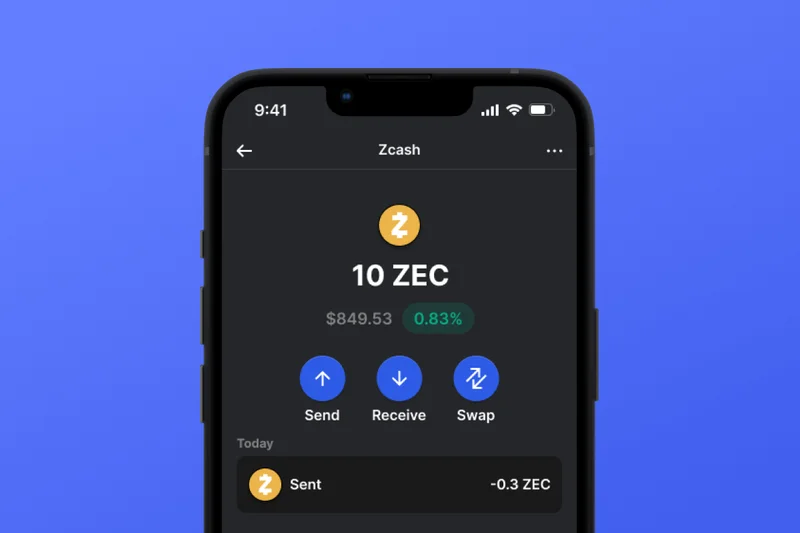
The question, then, is whether this is a logical re-evaluation of Zcash's utility in a more privacy-conscious world, or simply a knee-jerk reaction amplified by speculative fervor. Zcash, born from a fork of Bitcoin's codebase in 2016, leverages zero-knowledge proofs to enable anonymous transactions. It's technically sound for its stated purpose. But the market's current valuation, while significant, still leaves it 79% below its all-time high of $3,191 set back in 2016. This discrepancy—a tenfold surge bringing it only to a fraction of its historical peak—is a crucial data point. Is the market simply correcting a long-standing undervaluation, or is it overshooting due to an acute, singular fear?
Beyond the Headlines: What Are We Really Buying?
It’s easy to get swept up in the narrative of a privacy coin ascendant, especially when headlines scream about developer sentences and government oversight. But a truly data-driven analysis has to ask: what tangible metrics, beyond price action, indicate Zcash’s long-term viability as the solution to these privacy concerns? Is its adoption rate accelerating outside of speculative trading? How robust is its developer ecosystem compared to its competitors, particularly given the recent regulatory precedents? While the market cap suggests significant interest, are we witnessing genuine utility growth, or is this more akin to a flock of investors, startled by a sudden loud noise, all scrambling for the nearest perceived safe perch, regardless of its structural integrity?
The fear of centralized control and surveillance in crypto is legitimate, and the Samourai Wallet case certainly underscores it. However, the market's response, while understandable in its sentiment, needs to be viewed through a lens of critical data. A tenfold increase in five weeks suggests a significant portion of this move is speculative, driven by the narrative rather than a slow, organic accumulation based on fundamental utility. This isn't to say Zcash won't continue to climb, but the pace and the specific catalysts demand caution. How durable are these privacy concerns, and is Zcash truly insulated from similar regulatory pressures that might target its underlying technology or even its users? These are the questions that the current price action isn't answering, and they remain critical for any long-term assessment.
The Verdict: A Surge Built on Shifting Sands
Zcash's recent surge is undeniably impressive, a testament to the market's emotional response to perceived threats to privacy. But while the catalyst (the Samourai sentencing) and the underlying sentiment (Bitcoin privacy concerns) are real, the velocity of the price increase and its historical context suggest a significant component of speculative frenzy. This isn't a measured, data-driven accumulation; it's a reactive stampede. Until we see corresponding growth in actual usage metrics and a clear, sustainable answer to how Zcash itself navigates an increasingly hostile regulatory landscape, this "historic surge" looks more like a high-stakes gamble on fear than a solid bet on fundamental value.